
Start With the Coldest Realistic Night
Use the coldest temperature you may encounter overnight, not the daytime forecast, monthly average, or temperature expected when you go to bed.
Mountain forecasts can change, campsites may be colder than nearby towns, and valleys can collect cold air overnight. Remote trips also leave fewer options if the forecast is wrong. The less predictable the conditions and the harder it would be to retreat, the more conservative your choice should be.
Do not treat a fixed safety margin as universal. The margin you need depends on forecast confidence, trip length, shelter, moisture, remoteness, your previous experience, and the consequences of being wrong.
A useful starting rule is:
- Cold sleeper or uncertain: choose a comfort rating at or below the coldest expected temperature.
- Warm sleeper with relevant experience: the lower-limit rating may be a usable reference.
- Remote, wet, winter, or highly variable trip: add a larger margin and plan for equipment failure or weather deterioration.
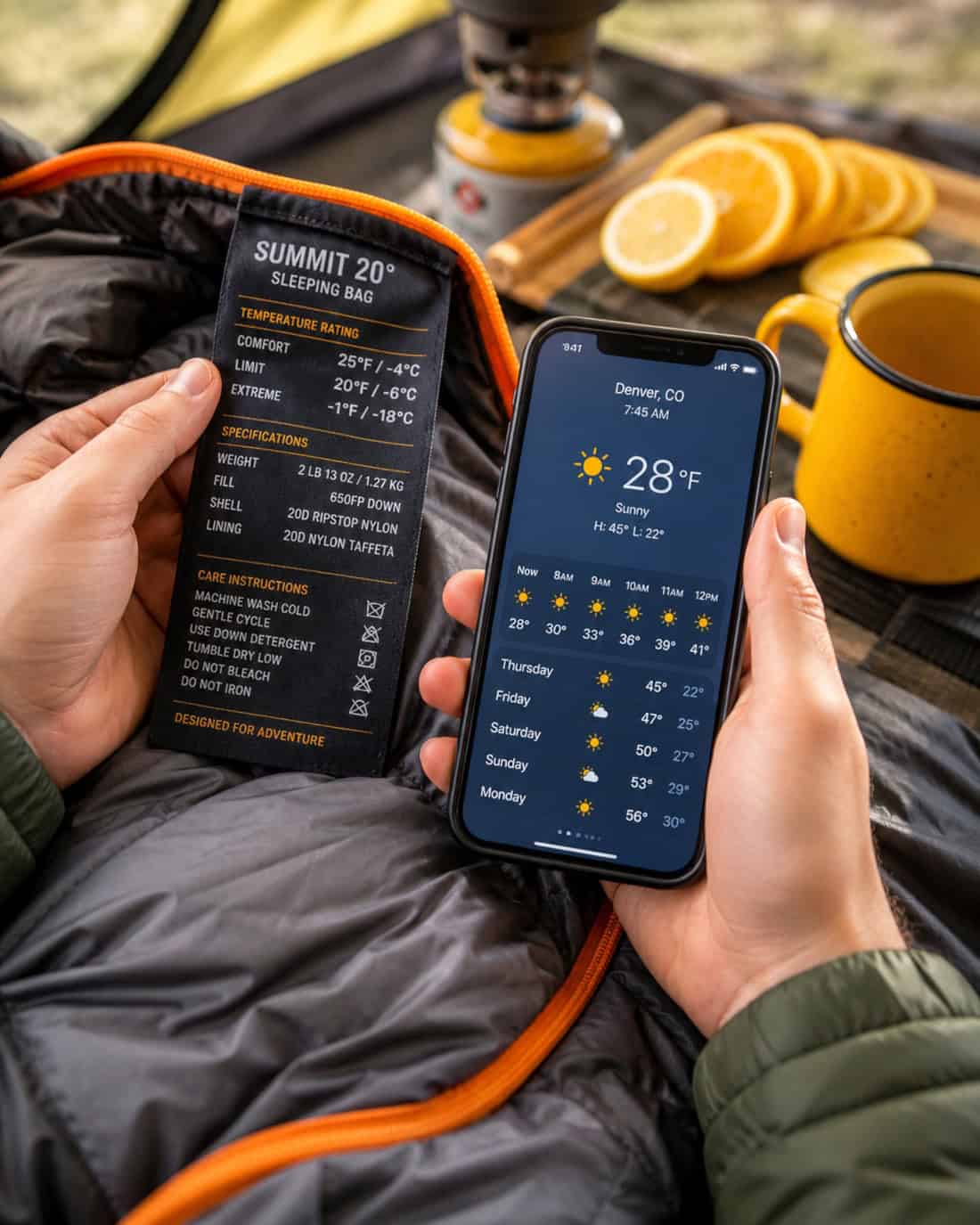
What ISO Sleeping Bag Ratings Mean
ISO 23537-1:2022 provides standardized laboratory methods for testing adult sleeping bags intended for sports and leisure use with lower-limit temperatures of -20°C (-4°F) or warmer. It does not cover children's bags, baby bags, military bags, or bags designed for extreme-climate expeditions.[1]
The test measures steady-state heat loss under controlled conditions. It allows useful comparison between bags tested under the same protocol, but it does not reproduce every part of a real night outdoors.
| Rating | Practical meaning |
|---|---|
| Comfort | A reference point for a colder sleeper resting in a relaxed position |
| Lower limit | A reference point for a warmer sleeper using a heat-conserving position |
| Extreme | An emergency-risk threshold, not a target for normal use |
| Brand rating without a recognized test | A manufacturer claim that may not be directly comparable with another brand |
Comfort and lower-limit ratings are both useful. The correct one depends more on how you sleep than on whether a product is marketed as men's, women's, or unisex. Brand conventions vary, so read the full specification instead of assuming that the temperature in the product name represents a specific ISO result.[2]
The extreme rating should not be used to choose a bag. It describes conditions involving severe cold stress and is not a promise of safe or comfortable sleep.
An ISO rating also does not guarantee that every person will feel the same. Real-world warmth changes with:
- sleeping pad insulation;
- clothing;
- bag fit;
- wind protection;
- humidity and condensation;
- ground temperature;
- food intake and fatigue;
- individual physiology;
- how much the insulation has been compressed, soiled, or wetted.
A standardized rating is a comparison tool, not a personal thermostat.
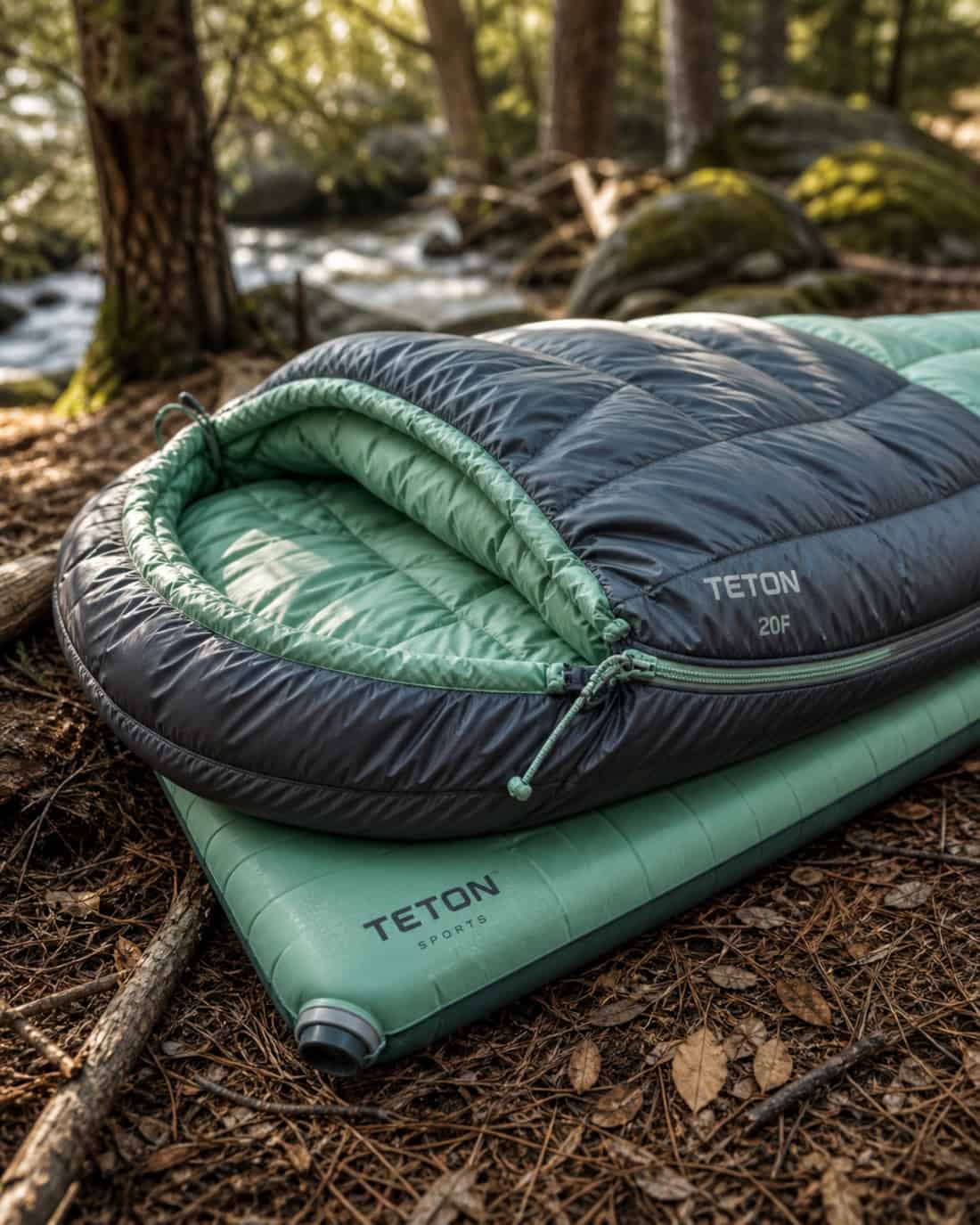
The Sleeping Pad Is Part of the Rating Decision
A sleeping bag loses much of its loft underneath your body because your weight compresses the insulation. The sleeping pad therefore provides most of the effective insulation between you and the ground.
Sleeping pad R-values are commonly tested under ASTM F3340, which measures thermal resistance under controlled steady-state conditions using warm and cold plates. The method is intended to make mattresses easier to compare across brands.[3]
Higher R-value means greater resistance to heat loss. When two pads are stacked, their R-values can generally be added to estimate the combined thermal resistance.[4]
The following ranges are useful as broad shopping categories, not exact temperature guarantees:
| Pad R-value | General use |
|---|---|
| Below 2.0 | Warm conditions |
| 2.0-3.9 | Cool conditions |
| 4.0-5.4 | Cold conditions |
| 5.5 and above | Very cold conditions |
These ranges are starting points. Ground temperature, snow, pad construction, inflation pressure, body position, and personal cold sensitivity still matter.[4]
Do not convert a difference in pad R-value into a fixed number of degrees of sleeping-bag performance. There is no universal rule that an R-2 pad makes every bag a specific number of degrees colder. Bag, pad, ground, and sleeper interact as a system.
A practical comparison used by REI pairs warmer bags with progressively higher pad R-values as overnight temperatures fall. Its guidance places pads below R-2 in warm conditions, R-2 to R-3.9 in cool conditions, R-4 to R-5.4 in cold conditions, and R-5.5 or higher in extreme cold.[4]
If you are cold mainly through your back, hips, or the surface beneath you, improving the pad may help more than buying a warmer bag.
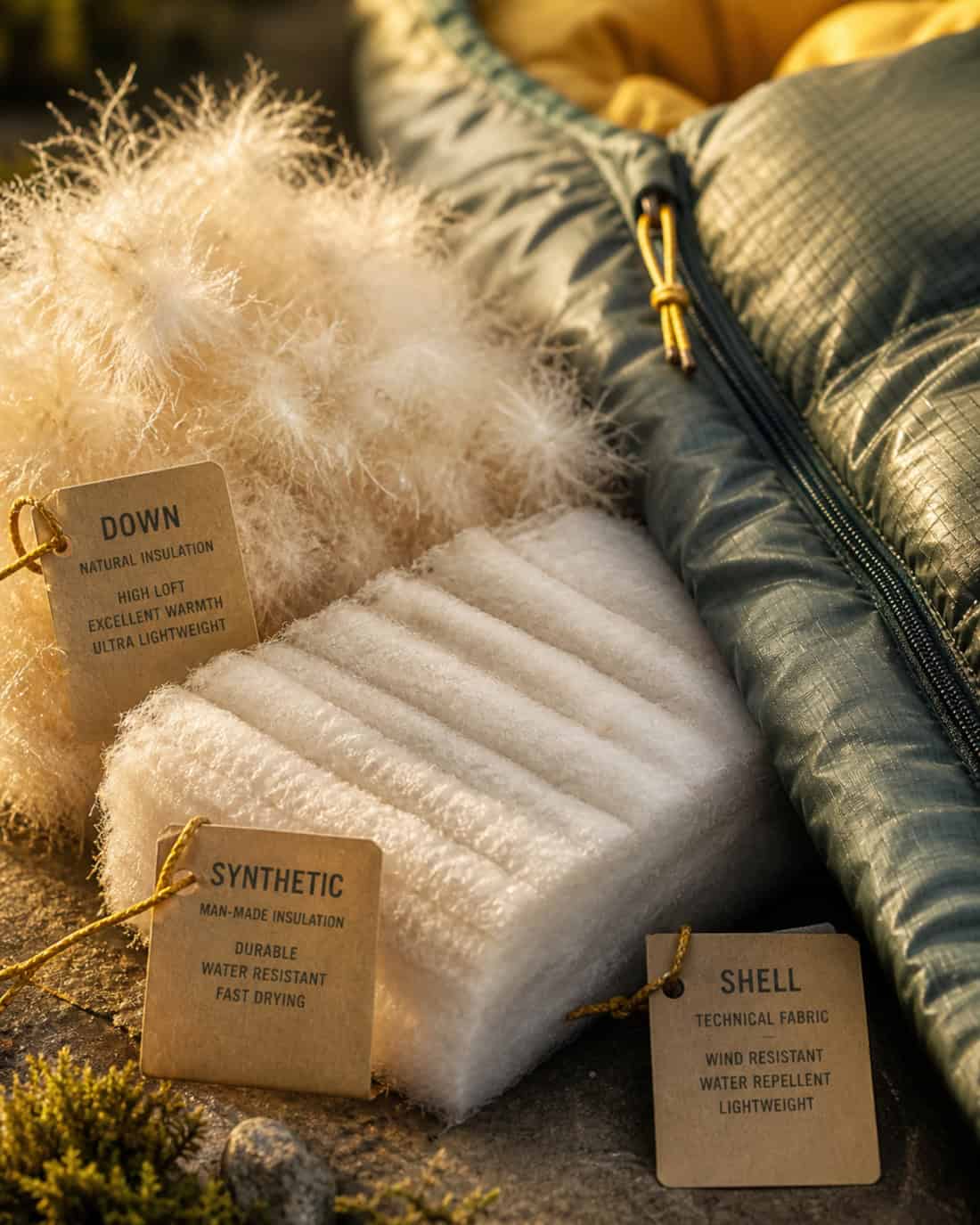
Down or Synthetic Insulation
The main insulation decision is not simply which material is "better." It is which set of tradeoffs fits the trip.
Down
Down creates loft that traps air around the sleeper. Its main advantages are:
- high warmth for its weight;
- small packed size;
- good recovery from compression when dry and properly maintained;
- strong performance for backpacking and other weight-sensitive use.
Its main weakness is moisture. Wet down clumps and loses loft. Water-resistant treatments can slow moisture absorption and help with light condensation, but treated down is not waterproof and still needs to be protected from sustained rain or saturation.[6]
Down is usually the stronger choice when:
- packed size and weight matter;
- the climate is mainly dry;
- the user has reliable shelter and dry-bag protection;
- the bag can be aired or dried during a longer trip.
Synthetic
Synthetic insulation uses manufactured fibers to trap air. Its main advantages are:
- better retention of useful insulation when damp;
- faster drying;
- lower purchase price in many product ranges;
- simpler care for occasional or less experienced users.
Its disadvantages are usually greater weight and packed volume for a comparable temperature rating. Synthetic insulation also changes with repeated use and compression, although the rate depends on the material, construction, storage, and frequency of use.[6]
Synthetic is often the more practical choice when:
- persistent rain or humidity is likely;
- the bag may be used in open shelters, wet tents, or paddling environments;
- fast field drying matters;
- price is more important than minimum weight or volume.
Hydrophobic Down
Hydrophobic down is treated to resist light moisture for longer than untreated down. It can provide useful protection against condensation and brief damp exposure, but it does not remove the need for a waterproof pack liner, suitable shelter, and regular airing.
Choose it as a moisture-management improvement, not as a substitute for keeping the bag dry.
Recycled Down and Responsible Sourcing
Recycled down can be recovered from existing products, cleaned, graded, and reused. Its quality should be evaluated through the same product specifications that matter for other down, including fill power, fill weight, construction, and tested temperature performance.
The Responsible Down Standard (RDS) covers animal welfare and chain of custody for eligible new waterfowl down. Recycled down is explicitly ineligible for RDS certification. A product therefore should not be described as containing "RDS-certified recycled down."[8]
RDS also does not measure warmth, durability, or environmental impact. It addresses sourcing and animal-welfare requirements. Treat certification and product performance as separate questions.
Fill Power and Fill Weight
Fill power measures the lofting efficiency of down under a defined laboratory method. A higher value means a given amount of down occupies more volume after conditioning and testing.[7]
Higher fill power can allow a manufacturer to achieve a target loft with less insulation weight. This can produce a lighter and more compressible bag, assuming the temperature rating, construction, shell, and other variables are comparable.
Fill power does not tell you how warm a complete sleeping bag is.
Fill weight is the quantity of down placed inside the bag. A bag with high-fill-power down but very little fill may be less warm than a bag with lower-fill-power down and substantially more fill.
When comparing down bags, check:
- ISO comfort and lower-limit ratings;
- fill power;
- fill weight;
- bag size;
- total product weight;
- baffle construction;
- hood and draft features;
- shell fabric;
- whether the fill is distributed differently across the top, bottom, or footbox.
Fill-power results may also depend on the conditioning and testing method used. Compare numbers carefully when products come from different markets or use different standards.[7]
The temperature rating remains the best summary of the complete bag when the products were tested under the same recognized protocol.
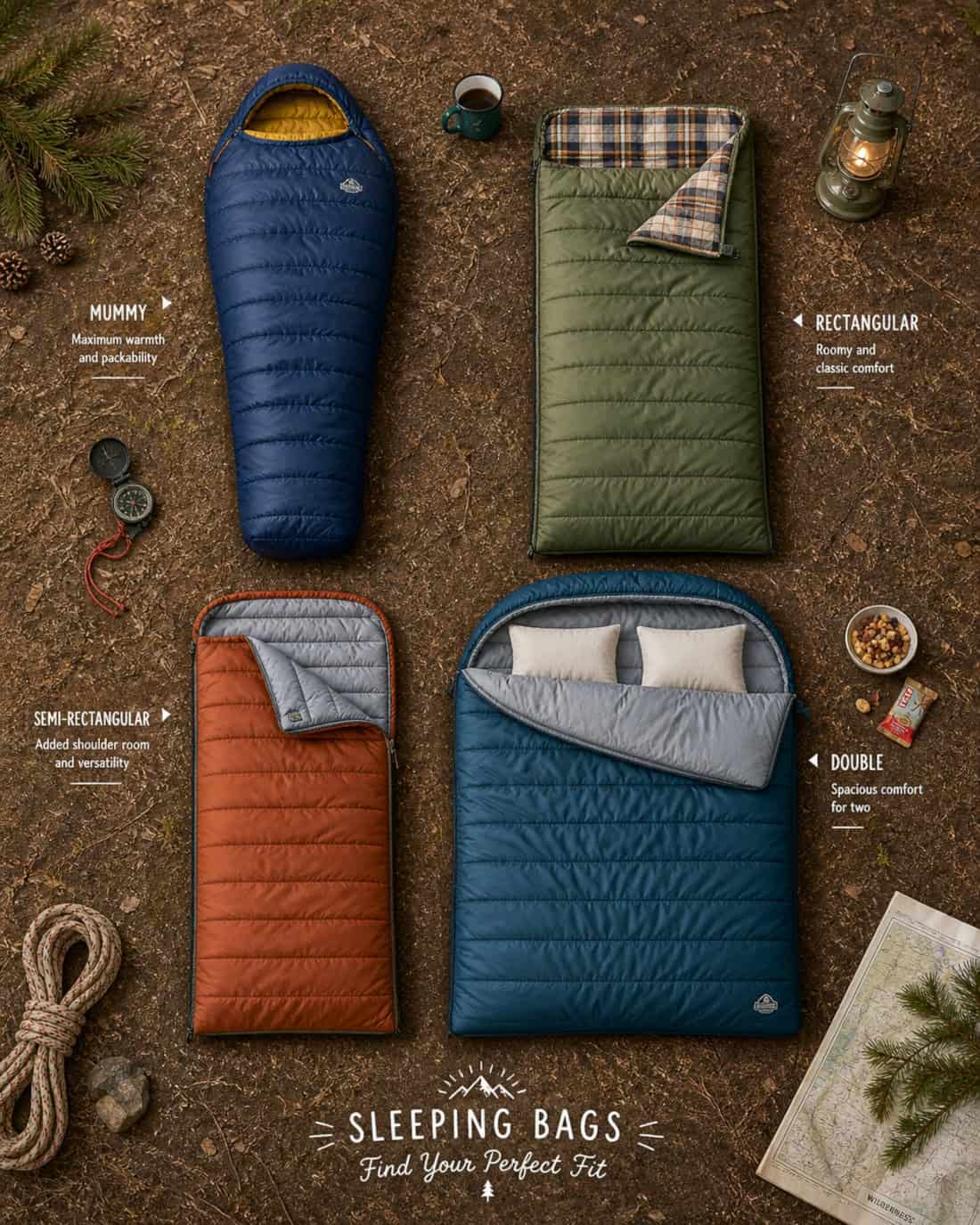
Shape and Fit
A bag must contain enough space for comfortable sleep without leaving excessive unused volume or compressing its own insulation.
Mummy Bags
Mummy bags taper toward the feet and usually include a fitted hood. Their close shape reduces unnecessary interior volume and makes them efficient for cold conditions and backpacking.
The tradeoff is limited room for movement. A narrow mummy bag may be unsuitable for a broad-shouldered user, a side sleeper, or anyone who strongly dislikes confinement.
Relaxed Mummy and Semi-Rectangular Bags
These designs provide more width through the shoulders, hips, or knees while retaining some taper. They are useful for side sleepers and restless sleepers who still need reasonable weight and thermal efficiency.
Rectangular Bags
Rectangular bags prioritize room and familiar bedding-like comfort. They are well suited to car camping and mild conditions, where packed size and weight are less important.
Their larger internal volume and less fitted openings generally make them less thermally efficient than a close-fitting mummy bag of similar construction.
Quilts
A backpacking quilt removes most or all of the insulated underside and relies on the sleeping pad beneath the user. This can reduce weight and improve ventilation.
The main challenge is controlling drafts around the sides and shoulders. Pad straps, correct sizing, and experience matter more as temperatures fall. A quilt can work extremely well, but it should not be assumed to perform identically to a sleeping bag solely because the two products display the same temperature number.[5]
Check Dimensions, Not Just Size Labels
"Regular," "long," and "wide" are not universal measurements. Compare the listed dimensions with your body and sleeping position.
Check:
- maximum user height;
- shoulder girth;
- hip girth;
- footbox dimensions;
- whether the shape allows bent knees for side sleeping;
- whether insulation is compressed when you move.
A bag that is too short can press the feet against the end and compress insulation around the toes. A bag that is too narrow can compress insulation at the shoulders, hips, or knees. A bag that is unnecessarily large requires the sleeper to warm more interior space.
Try the bag in your normal sleeping position when possible. Wear the layers you expect to use and close the hood, collar, and zipper before judging fit.
Children should use appropriately sized equipment designed for their age and conditions. ISO 23537-1 does not provide temperature ratings for children's or babies' sleeping bags.[1]
Construction Features That Matter
Construction affects how evenly insulation surrounds the sleeper and how well the bag controls drafts.
Baffles
Down bags use internal chambers to hold insulation in position. Better chamber design helps prevent down migration and thin areas.
Sewn-through construction joins the inner and outer fabrics directly. It is light and inexpensive but creates less-insulated stitch lines, making it more suitable for mild-weather products than serious cold-weather bags.
Boxed and offset baffles separate the shell from the liner and allow greater loft around the seams. Exact baffle names vary by manufacturer, so judge the complete construction rather than assuming that one branded geometry guarantees a specific temperature advantage.
Hood
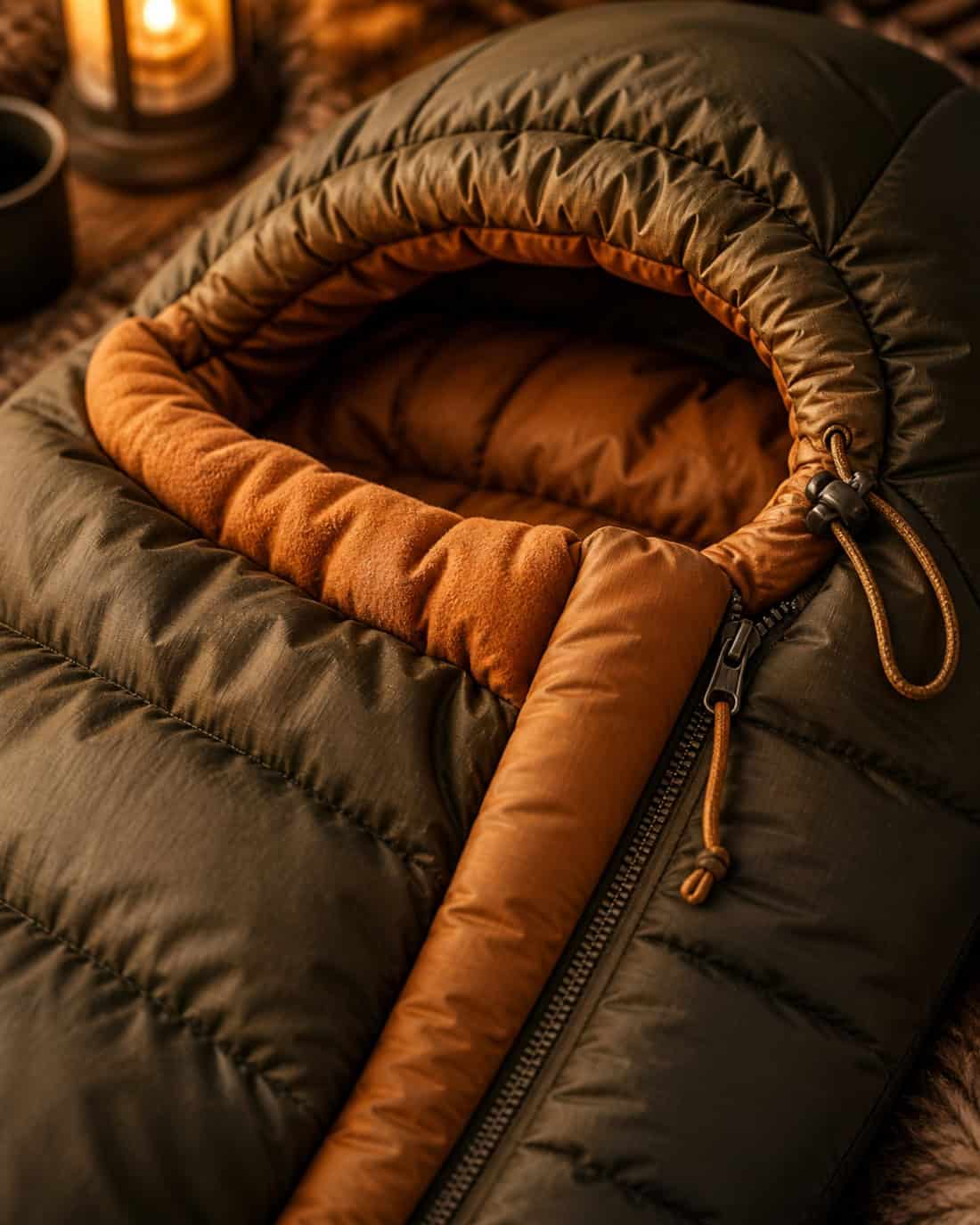
A fitted hood reduces heat loss around the head and neck. It matters most in colder bags. Check whether the hood closes comfortably without blocking normal breathing or forcing an awkward head position.
Draft Collar
A draft collar is an insulated section around the shoulders or neck. It limits warm air escaping from the bag when the user moves.
Zipper Draft Tube
An insulated tube behind the zipper reduces heat loss through the zipper area. Inspect whether it covers the full zipper and remains in place when the bag is closed.
Zipper Length
A full-length zipper improves ventilation and allows some bags to open like quilts. A shorter zipper may save weight and reduce one potential heat-loss area but provides less temperature control in mild conditions.
Shell Fabric
Light shell fabrics reduce weight but require more care around rough ground, pets, sparks, branches, and damaged zippers. Heavier fabrics are often preferable for car camping, family use, and frequent use in abrasive environments.
A water-repellent shell can resist light condensation or splashes. It should not be treated as waterproof protection.
Match the Bag to the Trip
| Use | Main priorities |
|---|---|
| Summer car camping | Space, ventilation, price, durability |
| Three-season car camping | Comfort rating, roomy fit, easy care |
| Backpacking | Tested rating, weight, packed size, pad compatibility |
| Ultralight travel | Total system weight, fit, draft control, skill with quilts |
| Bikepacking | Packed volume, waterproof storage, moisture control |
| Humid or rainy trips | Fast drying, shelter ventilation, insulation protection |
| Winter camping | Conservative comfort rating, high-R pad, hood, collar, dry backup plan |
| Alpine or expedition use | Specialist equipment beyond the normal scope of ISO 23537-1 |
Avoid choosing a universal "three-season" temperature. Three seasons in a low-elevation warm climate are not the same as three seasons in the Rockies, northern Europe, or a high desert.
Base the decision on the actual route, elevation, forecast range, season, shelter, and escape options.
Cold-Weather Safety
The extreme rating is not a safe operating target. A sleeping bag is only one part of cold-risk management.
Wetness, inadequate clothing, and exhaustion increase the risk of cold stress. Hypothermia can also occur in cool conditions when a person is chilled by rain, sweat, or cold water.[9][10]
Warning signs include:
- uncontrolled or persistent shivering;
- exhaustion;
- confusion;
- fumbling hands or loss of coordination;
- memory problems;
- slurred speech;
- unusual drowsiness.
These symptoms require immediate action. Move the person to shelter, replace wet clothing, begin safe warming measures, and seek emergency medical assistance.[9]
Do not rely on eating a snack, drinking water, or entering a sleeping bag as the sole response to suspected hypothermia.
For remote cold-weather travel:
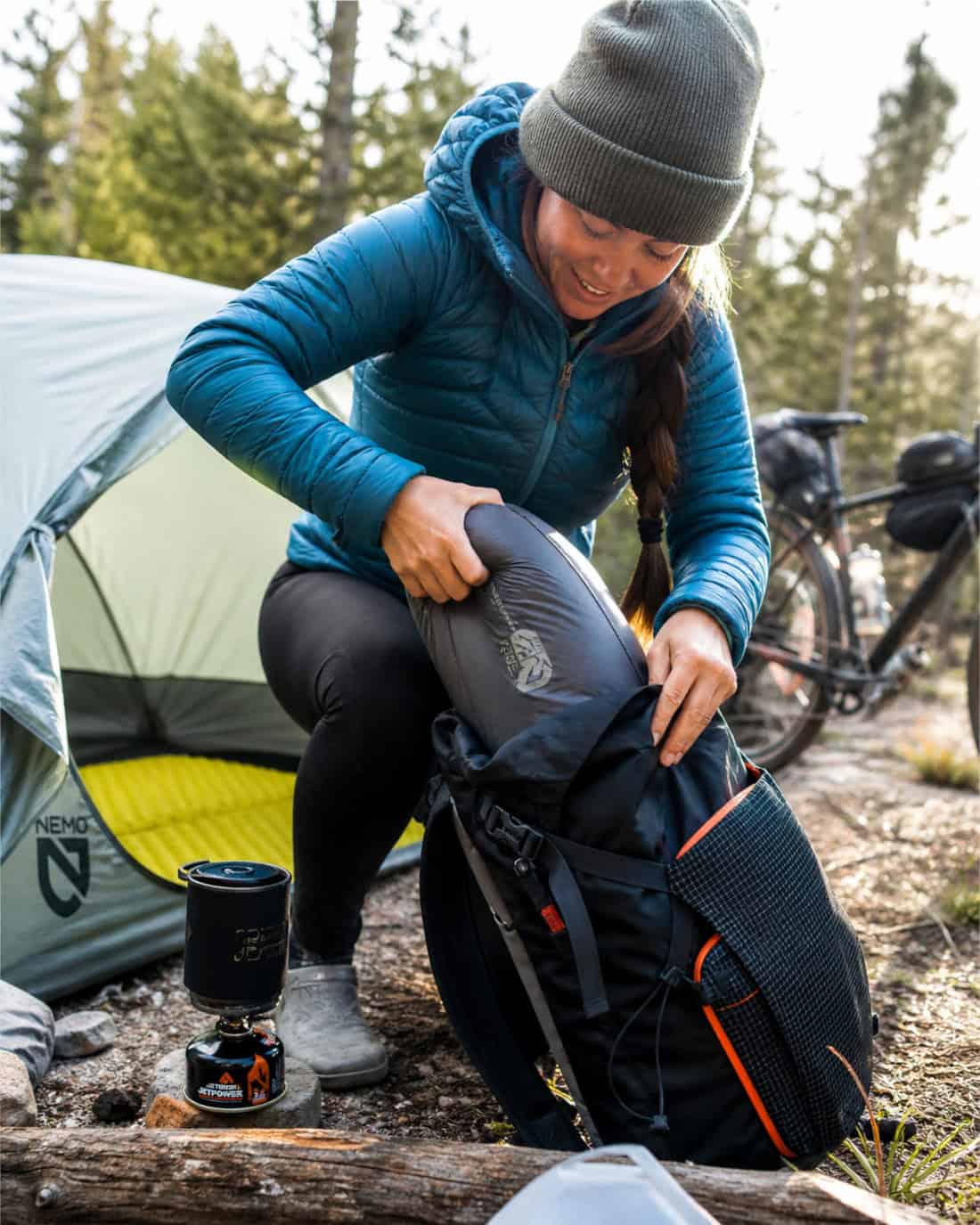
- carry insulation suitable for a credible worst case;
- protect the sleeping bag from water;
- use a pad appropriate for the conditions;
- know the forecast and retreat options;
- carry dry sleeping clothing;
- monitor partners for cold-stress symptoms;
- have an emergency plan that does not depend on the sleeping bag performing perfectly.
When a Warmer Bag May Not Solve the Problem
Before replacing a bag, identify how and where you are becoming cold.
Cold Mainly From Below
The pad may be under-insulated, damaged, underinflated, or poorly positioned. Test the bag with a warmer pad before assuming the bag is the problem.
Cold at the Shoulders, Hips, or Feet
The bag may be too tight or too short, causing the insulation to compress. The hood, collar, or zipper tube may also be leaving a gap.
Colder on Each Successive Night
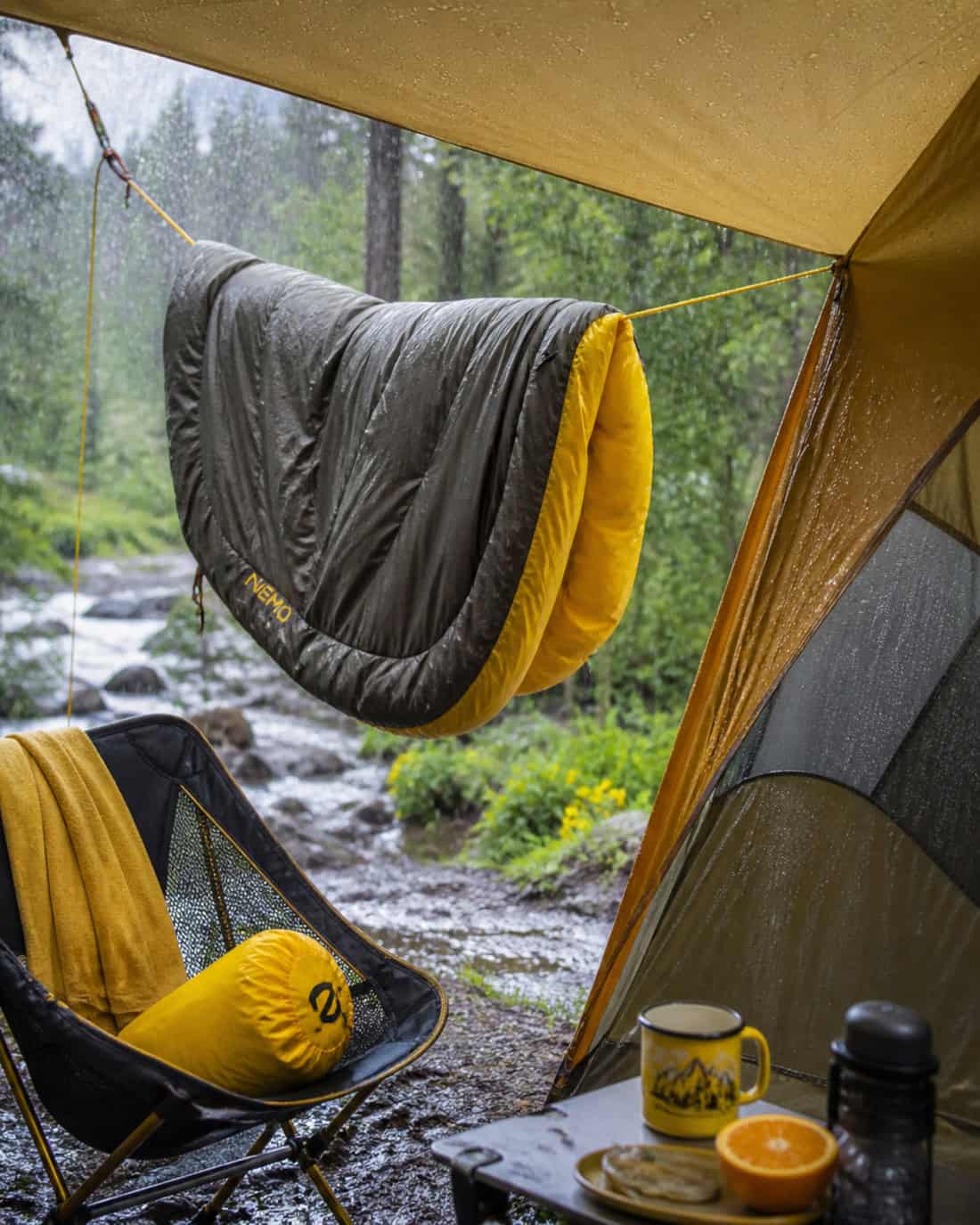
Moisture may be accumulating in the insulation. Improve shelter ventilation, keep the bag away from wet tent walls, air it when conditions permit, and protect it during transport.
Cold Throughout the Bag From the Beginning
Possible causes include an unsuitable comfort rating, insufficient loft, wet or dirty insulation, inadequate clothing, poor closure of the hood or collar, or simply a bag that does not match your personal warmth needs.
Cold Only in Unexpected Weather
The problem may be insufficient planning margin rather than a defective bag. Consider whether the trip requires a warmer bag, warmer pad, additional dry clothing, or a different shelter.
Avoid relying on fixed claims that a liner or clothing item will add a certain number of degrees. The result depends on fit, material, existing insulation, moisture, and how the complete system is used.
Washing, Drying, and Storage
Always begin with the manufacturer's care label. Materials, coatings, seams, and insulation treatments differ between products.
General guidance for many sleeping bags includes:
- Spot-clean minor dirt instead of washing the entire bag unnecessarily.
- Use a large front-loading machine or a machine specifically approved by the manufacturer.
- Avoid agitator-style machines that can place excessive force on the fabric and baffles.
- Use a cleaner intended for the insulation type.
- Rinse thoroughly.
- Support the bag when moving it while wet.
- Dry completely at the temperature specified by the manufacturer.
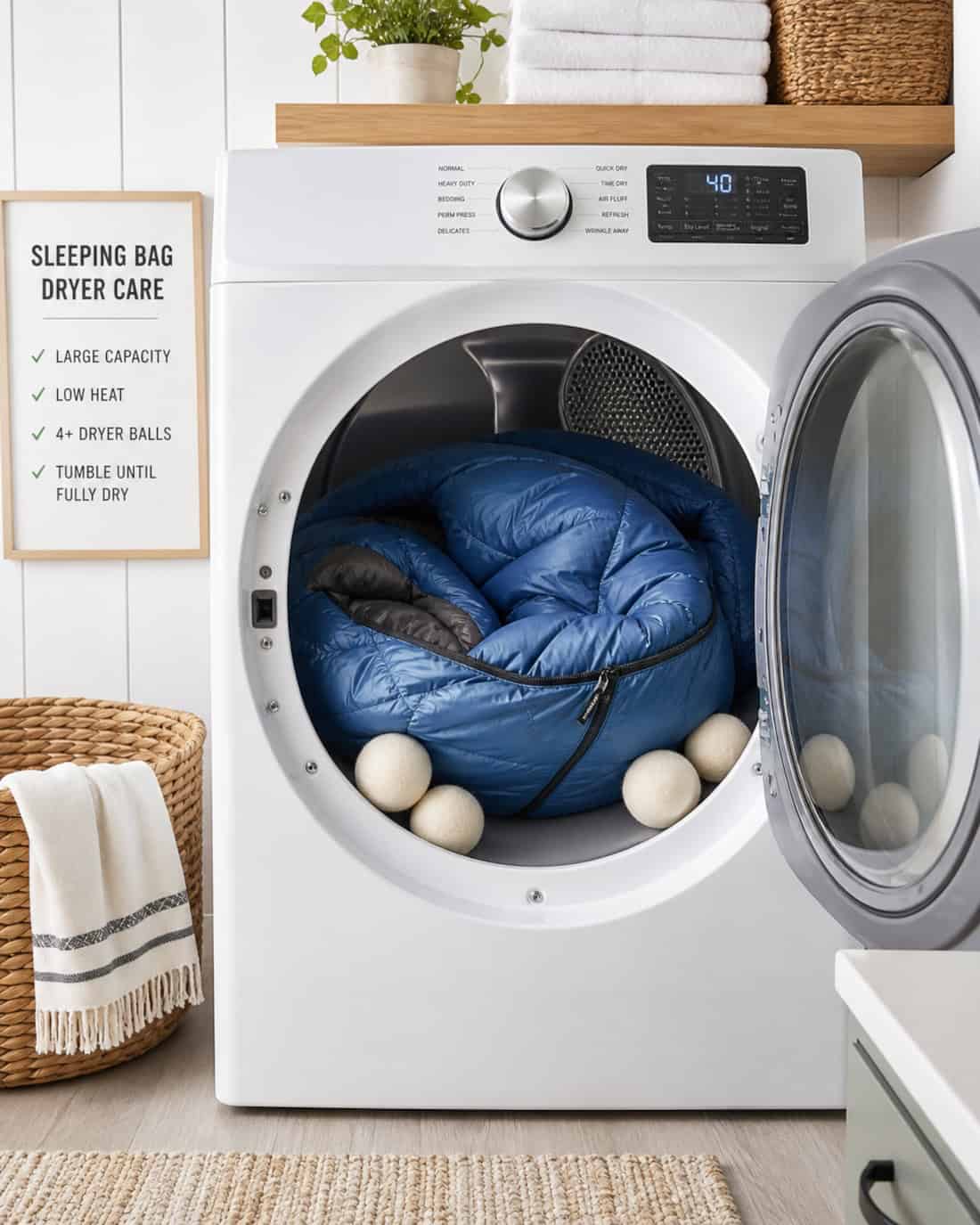
- Use clean dryer balls where permitted to separate wet down clumps.
- Continue drying until no damp or dense areas remain.
- Store the bag loose and dry, not permanently compressed in its travel sack.
Down usually requires more drying time and attention than synthetic insulation. A large commercial dryer may be useful, but heat settings must follow the product instructions. Excessive heat can damage lightweight fabrics and coatings.[11][12]
A stuff sack is for transport. At home, use a large breathable storage sack, hang the bag where the manufacturer permits it, or store it loosely in a dry space.
Pre-Purchase Checklist
Before buying, confirm:
- The comfort and lower-limit ratings, not just the model name.
- Whether the rating comes from ISO 23537 or another disclosed method.
- The lowest realistic temperature for the planned trip.
- Whether you normally sleep cold, warm, or somewhere between.
- The ASTM-tested R-value of the sleeping pad.
- Whether the insulation choice matches the likely moisture exposure.
- The bag's length, shoulder girth, hip room, and footbox fit.
- Fill power and fill weight for a down bag.
- Total bag weight and packed size.
- Hood, draft collar, and zipper-tube design for cold use.
- Shell durability for the way the bag will be handled.
- Care instructions and realistic drying options.
- Down-sourcing certification, where relevant.
- Return or exchange options in case the fit is wrong.
- Whether the real problem is the bag, pad, shelter, moisture, or fit.
The best sleeping bag is not necessarily the warmest, lightest, or most expensive. It is the bag that provides an appropriate tested temperature range, fits without compressing its insulation, works with the sleeping pad, stays manageable in the expected moisture, and matches the consequences of an unexpectedly cold night.
Sleep & Home Comfort Resources


Sources
- International Organization for Standardization. "ISO 23537-1:2022 - Requirements for sleeping bags - Part 1: Thermal, mass and dimensional requirements for sleeping bags designed for limit temperatures of -20°C and higher."
- REI Co-op. "Understanding Sleeping Bag Temperature Ratings."
- ASTM International. "ASTM F3340-22 - Standard Test Method for Thermal Resistance of Camping Mattresses Using a Guarded Hot Plate Apparatus."
- REI Co-op. "Sleeping Pad Buying Guide: Types, R-Value & Tips."
- REI Co-op. "Sleeping Bags vs. Quilts: Which Is Right for You?"
- REI Co-op. "Down vs. Synthetic: Which Insulation Is Right for You?"
- IDFL Laboratory and Institute. "Conditioning Methods Evaluation - Warm and Soft."
- Textile Exchange. "Responsible Down Standard 3.0."
- Centers for Disease Control and Prevention. "Recognizing Hypothermia."
- Occupational Safety and Health Administration. "Cold Stress Guide."
- REI Co-op. "How to Clean & Wash a Sleeping Bag."
- NEMO Equipment. "Cleaning, Repairing, and Storing Your Sleeping Bag."